


“I brushed the crumbs off of the fish and back onto the counter, threw the smelts in the frying pan while I got the eggs out of the fridge and cracked one.”
The Smeltdog Man is the story of how a Cape Bretoner marshalled his accidental invention, a marijuana-induced, munchie-inspired Smeltdog, into the most successful fast food franchise in Canada. As president of his newly formed Good Karma Corporation, he tells the tale of how his business empire grows beyond his control, turning him into a billionaire. (available only as a Kindle book on Amazon)

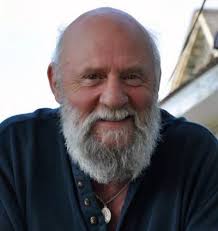
A copy of this book was sent to me by Silverbelle Solveig, who said the author and I were birds of a feather. She’s right, and I knew how to be in touch with Frank Macdonald, the author, I’d invite him to join us in the Jungle. This book is a farce, so if you have difficulty inhabiting a world defined by silliness, you will not be able to abide this one. If, however, you find satire to be a meaningful way to communicate big picture truths, then you might enjoy the Smeltdog Man’s worldview.
It also reminded me of my first novel, written fresh out of college, called Foodball about a guy who built a fast-food empire around the concept of taking your burger, fries, and thick shake, putting them through a grinder, shaping them into a ball, and frying them, resulting in one complete, golden meal pellet called the Foodball. The problem (among many) was that I wrote it as a serious screed, and I really had nothing to say. It resides, unread, in a binder on my bookshelf.


(This review was published, briefly and prematurely, in a previous SD. I re-publish it here so that it will have a permanent place in our Jungle Pantheon. SB SM)
by SB SM
Why, you may ask, is a Silverback reading a book about European eels? What can a slithery, snake-like fish that breeds (we think) in the depths of the Sargasso Sea have in common with an intelligent, hairy creature who lives in the Jungle highlands oft Africa.
A lot.
The Book of Eels lies at the intersection of art, religion, science, and history. Author Patrik Svensson is an arts and culture journalist at a Swedish newspaper. In this, his first book, he deftly interweaves the science of the species with its a historical role in various cultures. The subtitle of the book is “Our Enduring Fascination with the Most Mysterious Creature in the Natural World.” What? More mysterious than Silverbacks? Consider this:


- While humans and gorillas have been present on the plane for maybe 250,000 years, eels have been around for more than 40 million. They have survived Ice Ages and continental separation.
- While gorilla behavior has been scrutinized and observed in minute detail, eels have been studied by the greatest minds on the planet, from Aristotle to Freud to Rachel Carson, and yet to this day no human has ever witnessed eels mating.
- The eel lifecycle is like the salmon’s, but in reverse. They originate in the Sargasso Sea, a biologically rich section of the Atlantic Ocean bordered by four major ocean currents. They live their lives in fresh water, however, often hundreds of miles from the ocean. No one knows how they know where to go. Eventually, they return to the Sargasso, presumably to mate and die, although no one has been able to verify this.
- Eels can go as long as 6 months without feeding, traveling all the while.
- Eels have been known to live as long as 150 years in captivity. They have the ability to suspend the own development processes.
- Stories abound about their extraordinary resilience. They can travel across dry land, live in both salt and fresh water, and even, apparently, come back from the dead.
But eels and Silverbacks do have one thing in common. They are both endangered species, and in each case, Homo Sapiens is at fault. It’s a oft-told tale. While our species thrives thanks to reckless and relentless consumption of resources, others pay the price.
The story may be oft-told, but its meaning is so consequential that it justifies the repetition. Author Svensson, has found a novel and engaging way to convey the message. Throughout the book he intersperses personal anecdotes of his memories and lessons learned from fishing for eels with his father. The father-son story, deftly told, becomes a parable or metaphor of the current state of the species, Anguilla Anguilla, as well as implications for our own mortality.


What especially appealed to me about The Book of Eels is that it presented enough science to teach me something, enough history to show me the author had done his research, enough poetry to tell a meaningful story, and enough philosophy and religion to make me believe in magic. It proved a more rich and enjoyable experience than I ever expected from the lowly eel.